
GENESIS: HOW TO READ GENESIS WELL
There is a unique challenge to reading Genesis well.
Actually, I think there are a few challenges!
First, many of these stories are incredibly familiar to us. Outside of the gospel stories, Genesis contains lots of the most widely known bits of biblical narrative – from Adam and Eve, to Abraham and Isaac all the way through to Joseph and his amazing technicolour dreamcoat - okay, that last one is more Lloyd Webber than it is Genesis… the Hebrew just describes a ‘long-sleeved’ or ‘ornate’ robe. It wasn’t until English translations in the 15th century that we get any mention of multi-colour.
But even that makes a point – these texts have lives outside of the bible. And our brains don’t always hold a clear line between what is in the text and what is a version of the story that has been told and retold elsewhere. Tradition doesn’t either – generations and generations of varying readings of Genesis leave us as inheritors of a mixed reception.
So, as we read through Genesis now, in the summer of 2026, before trying to unpick specific stories and passages, I think we are better served by asking the question;
How should I read Genesis today?
As with any question of biblical reading and study, I can’t say there’s a definitive answer, but I think there are common traps we can avoid, as well as some useful bits of insight which can help us better understand these passages, and better understand God through them. We’ll cover some of these different things over the course of our reading of this curious and exciting book of the Bible.
What kind of text is Genesis?
One of the fundamental questions when approaching any text should be ‘what kind of text is this?’ We are very familiar with this in our modern day reading.
Let’s say you’re reading the newspaper. In between those covers, there are a wide range of styles of writing, and for different purposes. We know the difference between reporting, gossip columns, opinion pieces and satirical cartoons. We also know what to expect from those different styles and how we should approach them.
We wouldn’t be using our critical skills if we came away from reading the paper thinking ‘that was an odd poem on the front page about the war in Ukraine, but I loved that document about the fish stew at the new restaurant in town!’
It is so important that before we start unpacking a biblical text, we understand what it is we are reading. Then, we can make informed choices about which cultural, interpretive lenses are appropriate and helpful, and which are inappropriate and unhelpful.
More than poetry
I have heard it said, by well meaning people (and have even been guilty of saying it myself) that parts of early Genesis are actually more like poetry. Whilst this moves us beyond a literal understanding of the text, which we’ll get to in the coming weeks, it misses out on huge swathes of what is going on in some incredibly intricately constructed texts.
But if it’s not a written history or just poetry, what is it?
First and foremost, its theology – that is it speaks of God. When we read Genesis, you can hold firmly in mind that irrespective of the content, these stories are trying to tell us something about how these authors understood God. Whether it’s God creating worlds, or the God performing miracles with Abraham, or the God with plans for Joseph where there appears to be no hope, we see different shades of God’s colour, learning by stories who God is.
Some parts will be polemic, offering counter arguments to other religious or cultural practices and ideologies from the Ancient Near East. Others are more free expressions of understandings of God and the nature of God’s relationship to humanity.
Second, plenty of Genesis is etiology – it seeks to explain the origins of various things. From the creation stories (they manage to sneak two in there), to the flood story, these stories were common ways for communities to explain what they experienced in the world. It’s not always straight forward, and sometimes it’s layered within a story.
Genesis 19 is an example of this, where Lot’s wife is turned into a pillar of salt as she looked back on Sodom and Gomorrah. Now, we might not know this in reading it, but the Dead Sea, which is otherwise called the Salt Sea, has naturally formed pillars of salt. Sodom and Gomorrah, if they were real places, are thought to have been located on the shores of the Dead Sea.
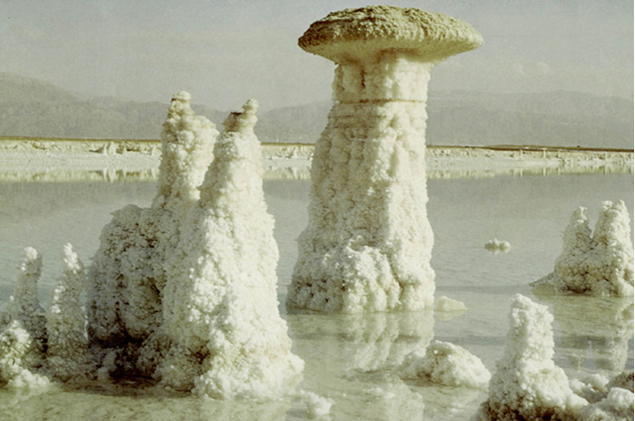
Salt Pillars in the Dead Sea
In this particular instance, it could be that the text is explaining where those pillars came from, or it is making a point inspired by what it’s seeing. The chances that this story was independent of the actual pillars of salt are very slim.
Finally, for now at least, one other lens through which to approach Genesis is identity formation. If we had to describe the story it’s telling, it could be said that Genesis is a book about the formation of God’s chosen people. That narrative picks up in earnest with the story of Abram/Abraham, and we journey with the so-called Patriarchs (Abraham, Isaac and Jacob), and their story sets out what becomes the foundational covenant, or promise, between God and Their people, as well as the earliest expressions of living in that covenantal relationship. Not only this, but there is lots in Genesis which intends to set out how God’s people are different from other tribes and nations around them.
As well as identity formation, there are plenty of people who make a case that, if Genesis was written during or after the Babylonian exile, then some stories are trying to re-establish who the people are in light of that experience. Joseph’s story, in particular, covers themes like displacement, survival in foreign lands, maintaining identity abroad and the hope of restoration- all of which would have resonated strongly with exilic communities.
So, that’s not exhaustive, but there are some things to think about as you read through Genesis.
What might this story be trying to communicate about how they understood God?
Could this story be trying to explain something they didn’t understand in the world?
What could this story be telling us about what defines God’s people and their place in a difficult world?
For a book of the bible that is often very familiar to us, these questions can put us in good stead to approach the familiar with fresh eyes, and might make more sense of what’s going on in a collection of stories which cover a lot of ground!